A teacherA plan that fits her classroom.
01- 5 min · Look closely at a seed.
- 15 min · Draw what a plant needs.
- 10 min · Compare ideas together.
More time for the students in front of her.
The printing press, AI coding,
and what happens when
more people can create.
When the tools of creation change, what becomes possible?
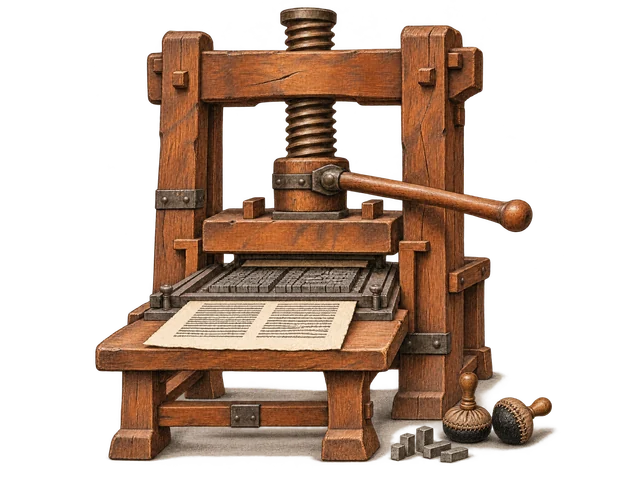
WOOD. INK. POSSIBILITY.MAINZ · c. 1450sMake a tool to track repairs
and schedule a visit.
Inspired by an analogy from Boris Cherny,
creator of Claude Code at Anthropic.
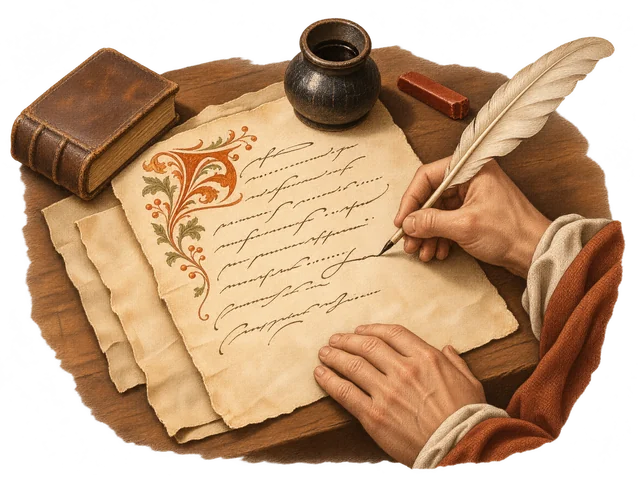
A skilled hand. A thoughtful builder. When making something takes substantial time and specialized labor, fewer projects can be attempted.
ONE COPY. MANY CAREFUL HOURS.The first parallel: a production bottleneck becomes less restrictive.
Reusable type makes another impression possible. A written request gives software a starting point. Watch the page become a tool.
“Make a repair tracker.
Let me schedule a visit.”
Try it. Make one everyday task easier.
Different mechanisms, a shared opening: printing reproduces text; AI generates and modifies software. The software still needs judgment, review, and maintenance.
The larger story is who gets to participate—and what they do with the opportunity.

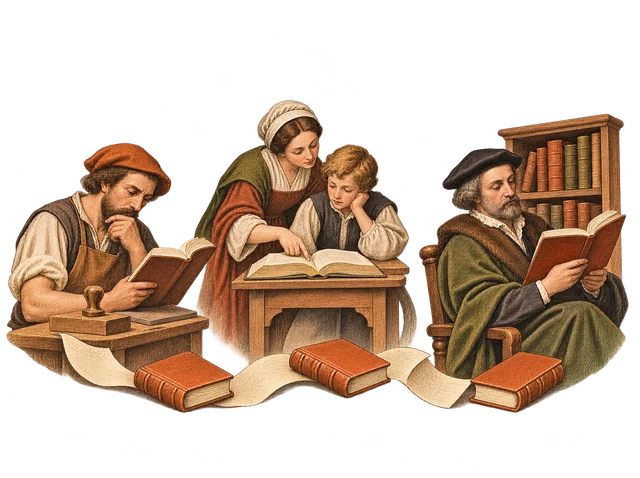
Printers, booksellers, teachers, readers, and institutions helped turn reproducible pages into access to knowledge. Learning to read and obtaining books still mattered. The benefits were uneven, and the changes were not instant.
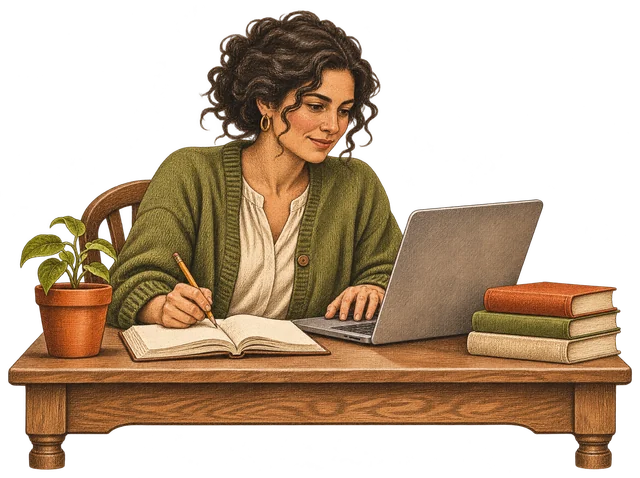
For software, access also means skills, affordable tools, and support. The possibility is more people making something useful for their own lives.

A teacherA plan that fits her classroom.
01More time for the students in front of her.

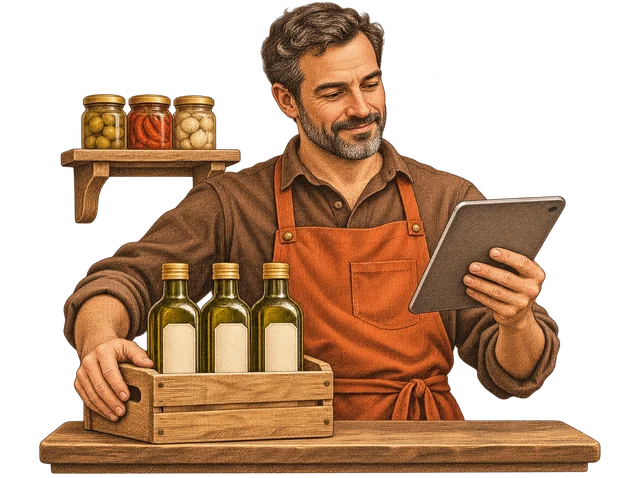
A shop ownerA clearer picture of the shelves.
02A delivery is ready to check in.
Know what’s available before a customer asks.

A property managerA repair with a next step.
03The resident needs a visit.
No appointment yet
A resident knows when help is coming.
Illustrative tools, not live services. These demos use fixed sample data and make no AI calls.
| Printing | AI-assisted software |
|---|---|
| Less labor to reproduce text | Less manual work for some implementation tasks |
| Written material can circulate more widely | More people can attempt useful software projects |
| New uses of accessible knowledge emerge over time | New uses of accessible software creation may emerge |
Knowing what to make, checking whether it works, and deciding whom it serves remain human responsibilities.
Every request should be
scheduled immediately.
One human question makes the tool more useful.
An ink annotation becomes a review comment.
The responsibility stays with people.
The first change is easier to see.
The possibilities beyond it are the interesting part.
What everyday problems could people solve with tools they make themselves?
What new ways of working could grow from broader access to software creation?
What uses are we unable to imagine today?
The story is not just what the machine can make.
It is what people can make possible.
Illustrations created with Higgsfield for Astra Design. Interpretive artwork; not archival images.
An editorial analogy, not a claim that two technologies—or their histories—are the same.
CHM’s account of its September 23, 2026 conversation with the creator of Claude Code at Anthropic. Cherny’s analogy and expectations are paraphrased here as his perspective; no direct quotation or timestamp is claimed.
Context for movable metal type and Gutenberg’s work in Mainz in the 1450s. This feature concerns Gutenberg-era Europe, not the beginning of printing worldwide.
Early printed books, their manuscript traditions, and the spread of the printing process. Access expanded over time; machinery alone did not create universal literacy.
A requirement we missed“Only schedule a visit when the resident’s availability is confirmed.”